
Charlotte Phillips speaks to top local schools, discovering how they encourage pupils to flourish outside of the classroom
Today, opportunities outside the classroom are almost as important as those inside when it comes to providing a rounded education. While traditional sports are still central to the extracurricular programmes at our schools, there’s also so much more for pupils to get involved in.
Given the breadth and range of extracurricular activities on offer, it’s a minor miracle that schools in our area manage to pack it all into the school day. But while the logistics can be challenging (have pity on the member of staff tasked with making the timetable work for every pupil), school leaders in our area are in no doubt that it’s worth every ounce of effort.
Personal development
Encompassing clubs, activities, sports – everything, in fact, that happens out of the classroom – the extracurricular (or co-curricular) programme can be where children effectively find themselves. As Daniel Koch, senior deputy head at Kimbolton School, explains: “It’s where they develop their passions in many ways: getting outdoors, doing something different outside the classroom, being creative and experiencing everything life has to offer.”
More than that, he says, it’s a powerful incentive to counter other pressures that young people face. “You could very easily get sucked into doing nothing but studying and using your phone – and that’s not good for young people – or people of any age.”
Trying new things also gives pupils vital life lessons. In a society that values tangible achievements, trying out activities can help develop skills “rather than purely ticking off another grade or level,” says James Piper, head of the Perse Prep.
No wonder schools describe extracurricular activities as one of the key pillars of the educational experience, along with academics and pastoral care. “For a good-quality school to thrive, all three of these have to be outstanding,” says Dominic Atkinson, deputy head of co-curricular at Gresham’s.
Outstanding, yes, but very definitely not prescriptive. Schools’ extracurricular offerings are arguably where there is the most room for flexibility, and where students’ talents and interests can develop and be celebrated. “It’s about shaping the whole person and allowing them to create their own individual pathway,” says Jenny McLeod, deputy head of co-curricular (11-18) at Stephen Perse Cambridge. “Our mission statement as a school is to allow pupils to follow their own pathways to success, and a lot of what we offer is quite flexible.” That can translate into running a club or activity – if possible – even when the uptake is low. “If a couple of students are really passionate about something, we still want to be able to facilitate them to do that activity,” Jenny affirms.
In numbers alone, the schools’ extracurricular offerings are dazzling. Kimbolton School runs around 65 clubs a term (not including those linked to sports), pupils at the Perse Prep have a choice of around 80, while more than 120 clubs run every week for pupils in years 7-13 at Stephen Perse Cambridge. Uptake of activities can be equally extraordinary, with around 70% of pupils at Gresham’s involved in its Combined Cadet Force.
Any given week (sometimes even in the holidays, not just term time), there could be rehearsals for concerts and productions, or expeditions for students working towards their Duke of Edinburgh’s Awards. There’s also one-off events like Gresham’s whole-school 5km fundraising event with an obstacle course or Kimbolton School’s prize-winning participation in a 125-mile, four-day canoe endurance race from Devizes to Westminster.
-
- Activities like sports at Kimbolton School get students outside
-
- Climbing at Gresham’s help students to get away from their screens
A programme of many parts
If fitting so much into the school day (even if that does extend to early morning starts and quite often Saturdays as well) is a huge challenge, so too is working out what exactly the extracurricular menu should include and how to ensure there’s something to cater for every taste.
Involving students is key, thinks Jenny at Stephen Perse Cambridge. “Students tell us what they want to do, so it might be that we run some clubs one year but not the next, depending on their levels of interest.”
At Gresham’s, both existing and potential elements in the extracurricular programme are regularly reviewed and either maintained, removed, enhanced or introduced. Teachers are also encouraged to build on their interests, which can lead to major new projects. “We have a member of staff who is hugely into agriculture,” says Dominic. “We have a farm onsite – a smallholding – and are doing crop trials. It’s developed organically over the last three years.”
While there is similar variety on offer at other schools – from Warhammer to aeronautical engineering at Kimbolton School, taekwondo to coding at the Perse Prep and yoga, Zumba and martial arts (as well as Dungeons and Dragons) at Stephen Perse Cambridge – traditional team sports remain a mainstay of the extracurricular programme in our area’s schools; something that’s unlikely to change any time soon. Football, rugby, netball, hockey and cricket stay dominant on the fixtures list – and for good reason.
Skills such as leadership, resilience and the reality of coping with failure, as well as success, are all part of the experience. And just as valuable are all the other elements that go into being part of something bigger than yourself.
“We have A to D teams for girls and boys so that everyone gets the match-day experience,” says James at the Perse Prep. When fixtures are arranged, a lot of work goes into ensuring the teams are evenly matched so that “whatever standard you’re at, you could still get the winning goal and enjoy the sport. But it also involves getting into match kit on the day, going on the coach journey to another school, having a match tea and winning or losing together.”
Far from ‘all work and no play’
It can sound as if every element of life outside lessons is highly organised. But schools also make sure that there are times when the pace is dialled down and students can recharge their batteries. At break times, children at the Perse Prep can make full use of the school’s seven acres of parkland, building dens and playing in the bushes and trees – fully supervised, of course. Stephen Perse Cambridge pupils, meanwhile, might relax by playing chess or board games in the library, or creating tiny hats for special care babies in the drop-in Knitwits crochet and knitting club. “There is time for them to be children,” says Jenny.
While sound pedagogical reasoning underpins the value of extracurriculars, there’s another, purely emotional reason why it matters so much. “Adults looking back at their childhood might not remember many of their lessons, despite all the hard work that goes into planning them,” points out James. Instead, what he describes as those ‘wowee’ moments tend to be forged outside the classroom.
And while schools invest a whole lot of energy and thought into ensuring their extracurricular programmes create an offering so rounded that it would probably qualify as a ball sport in its own right, it’s also about having a thoroughly good time. “We do lots of things that are just fun,” confirms Daniel at Kimbolton School, where casual events include a treasure hunt round the school. “It’s simply a nice thing to do – and everyone needs a bit of that.”
-

- Creative, arty clubs are available at Gresham’s
-

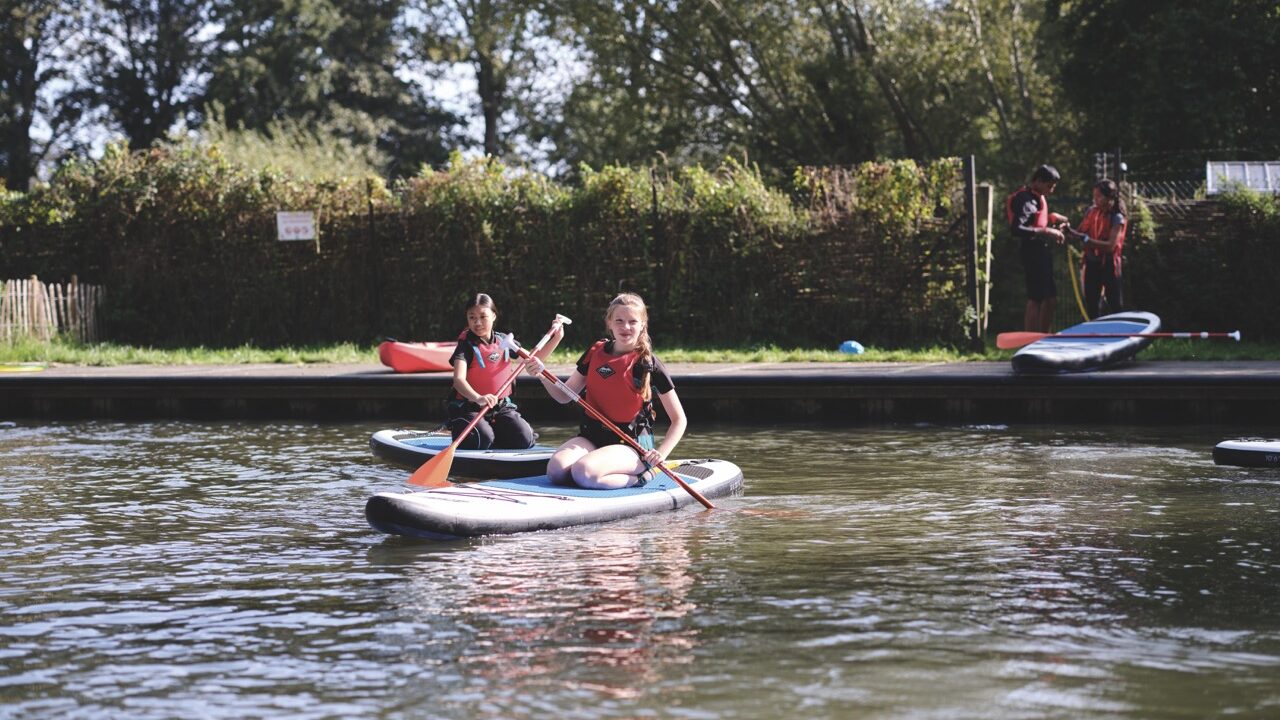
- Students enjoy water sports such as sailing at Kimbolton
-

- The opportunity for archery training at Stephen Perse Cambridge shows the range of offerings available
Why are extracurricular activities so important?
- Life experiences: From dealing with disappointment to celebrating last-minute victories, team sports (the beating heart of many extracurricular programmes) condense much of the human experience into short bursts of time, forging a sense of community and forming firm friendships along the way.
- Opportunity: With clubs, societies and activities offering breadth and balance, and catering for every interest, students can discover talents and passions that endure for a lifetime.
- Being known and recognised: Many pupils may not shine in the classroom, but excel elsewhere. The confidence that brings can transform their lives, both at school and beyond, allowing them to thrive in the future.
- Balancing activities: Putting in hours to train for a match, practise an instrument or rehearse for a production helps students learn how to manage time and juggle commitments.
- Preparation for the future: Learning to be a good leader or team player, get on with others in stressful or competitive situations and go outside your comfort zone to take on new challenges are all transferable skills offered by extracurricular activities – and valued in rapidly changing workplaces.
- Fulfilment and fun: By throwing themselves into the life of the school and embracing all those opportunities wholeheartedly (often getting it right, sometimes getting it wrong), students are able to learn by doing.
