
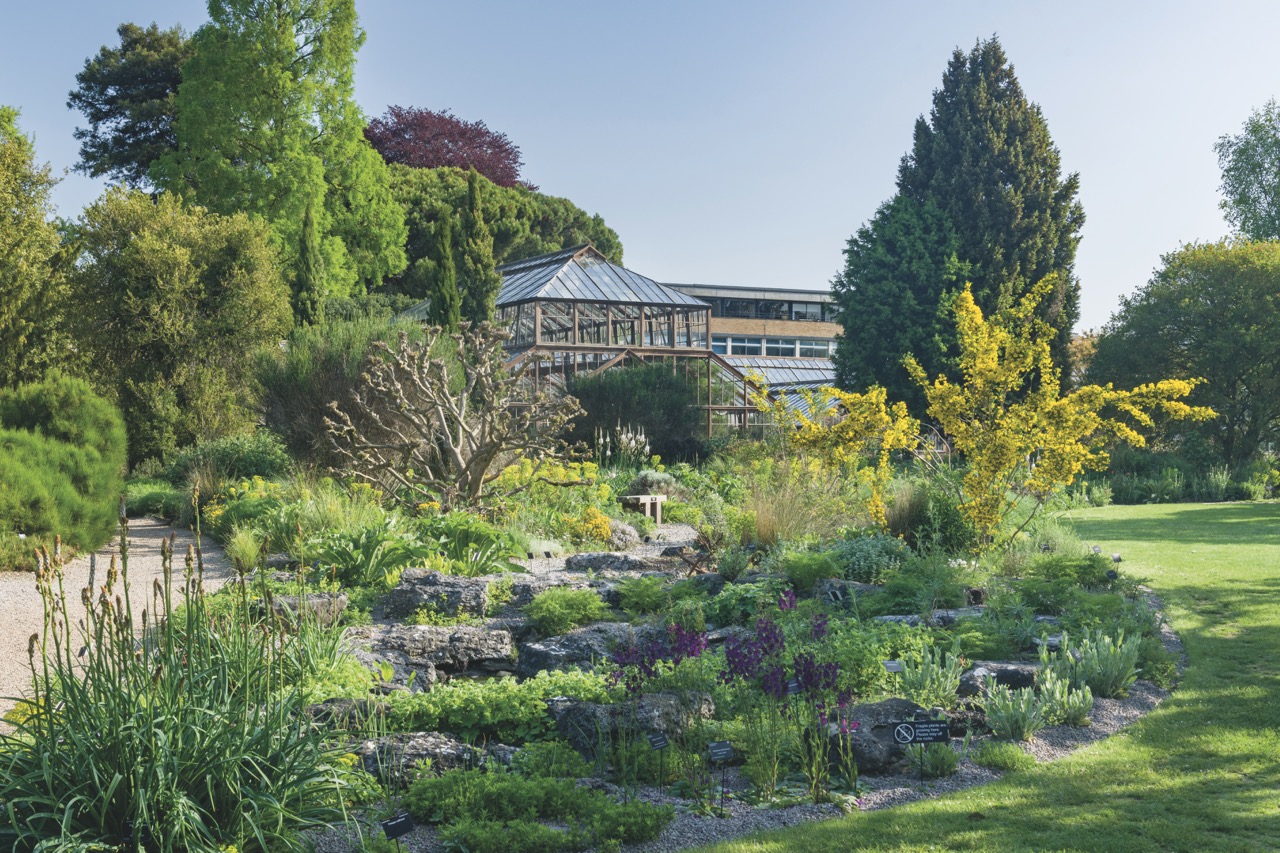
As we return from summer escapes spent soaking up the climate and culture of destinations near and far, Sally Petitt explains how we can harness horticultural inspiration to keep those sweet holiday memories alive in our own gardens
As gardeners, we can find horticultural inspiration in many places, including holiday destinations all over the world. Often, the ideas we bring home are not so much about a complete overhaul of our garden but introducing a touch of the exotic into our own plots – a gentle reminder of happy, carefree time spent away from the everyday.
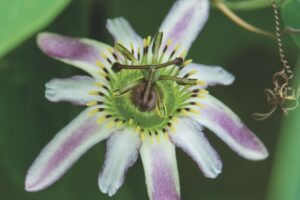
Passionflower (above) and jasmine
can stand in for exotic plants like bougainvillea. Image by Howard Rice
I know I’ve found inspiration for both my own garden and Cambridge University Botanic Garden while on holiday in various locations, ranging from clifftop plantings in southern Italy to the alpine meadows of Switzerland and gardens of Provence. Inspiration also comes from closer to home. The introduction of Alexanders (Smyrnium olusatrum) to my garden – a plant admired on holidays in Suffolk – has allowed me to enjoy its lime-green umbels from the comfort of my own home, while reminiscing about times on the east coast.
Indeed, many of us glean ideas for our gardens from trips within the UK. Cornwall is a Mecca for garden lovers, who can revel in the lush growth of plants such as tree ferns (Dicksonia antarctica). While this species relishes the mild, damp Cornish weather, it’s not so well suited to conditions here in Cambridge – but there are a host of plants seen in Cornwall that can also be happy here in East Anglia.
Exotic species such as the cabbage palm (Cordyline australis), Chusan palm (Trachycarpus fortunei), agapanthus, red valerian (Centranthus ruber), Fuchsia ‘Hawkshead’ and Aeonium arboreum ‘Schwarzkopf’ are all non-native species that thrive in Cornwall and grow well here at the Botanic Garden, where they benefit from our low rainfall, mild winters, well-drained soils and a south-facing aspect. If put in an exposed site with wet, cold winters, however, they are almost certainly destined to fail.
Overseas discoveries
If you like to travel further afield, the Mediterranean could inspire you to recreate an enclosed terrace, and while you might not be able to clothe your garden walls with Bougainvillea or Plumbago auriculata, these can be substituted with plants such as passionflower (Passiflora caerulea), jasmine (Jasminum officinale) or, draped on a sheltered, sunny wall, the beautifully scented star jasmine climber (Trachelospermum jasminoides).
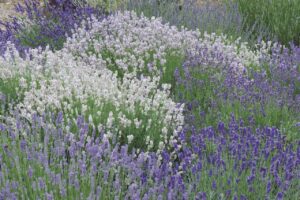
Lavender is striking. Image by Howard Rice
Add to this a few wall planters of trailing pelargonium and you’ll have an instant hit of the Mediterranean right in your own back garden!
Meanwhile, simply adding a few plants of lavender (Lavandula x intermedia ‘Grosso’) and cotton lavender (Santolina chamaecyparissus), which provide structure, scent and flowers, can instantly transport you back to strolls through that glorious garden in Provence.
One of my favourite plantings here at the Cambridge University Botanic Garden are our Mediterranean Beds, which include only species from this region. The area includes a broad sweep of plants from across the Mediterranean, such as Cupid’s dart (Catananche caerulea), white-leaved rock rose (Cistus albidus) and white asphodel (Asphodelus albus), which might not grow together naturally, but when combined here in a naturalistic planting give the impression of that classic Mediterranean landscape, especially when they’re bathed in sun and heat.
Living souvenirs
It might be tricky to replicate a whole landscape in your own garden, but growing just one plant spotted on your travels can serve as a happy reminder of trips to distant lands. For example, while I can’t recreate an entire alpine meadow, I can incorporate a few species from this habitat, such as moss campion (Silene acaulis) or alpine pasque flower (Pulsatilla alpina), in an alpine trough to bring a touch of Switzerland to my garden.
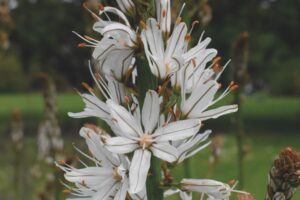
White
asphodel thrives in the sun. Image by Sally Petitt
Alternatively, you may want to emulate a garden style where you need to substitute those plants that thrive in warmer climes with those that favour your conditions. Either way, you can introduce elements that will serve all year to remind you of a memorable holiday destination.
If you do fancy adding a horticultural taste of your travels to your own garden, it’s worth remembering the old gardening adage of ‘right plant, right place’. Take time to check what conditions your chosen plant will flourish in – whether it needs full sun, free-draining soil or protection from frost – so that it can thrive, not just survive. Then sit back, soak up the sights and scents and let your garden send you back to the places that inspired you the most.
Gardening jobs for August
- Deadhead flowering plants frequently to encourage flowering.
- Collect the seeds of annuals and biennials when the seed pods have become ripe and dry.
- Prune lavender, once the flowers have faded, to form neat domes.
- Take softwood cuttings of tender perennials such as pelargoniums, salvias and penstemons.
- Keep watering – but ensure that water is poured at the roots of the plant, where it’s needed.
Getting started
- Plants such as Aeonium arboreum ‘Schwarzkopf’ thrive in a sunny position and might need overwintering in a greenhouse or your house.
- You can substitute tender exotic species such as Bougainvillea with hardy alternatives that have the same habit.
- Many plants from holiday hotspots, including the Cornish coast and the Mediterranean, grow in well-drained soils, so add grit to poorly drained soils to help plants such as lavender or rock roses flourish.
- Do your homework and check what conditions a plant requires before purchase to ensure it has the best chance of survival.
Sally Petitt is head of horticulture at Cambridge University Botanic Garden. From gardens for the senses to beds of roses, explore more of Sally’s gardening tips.
