As public trust in institutions is tested, artificial intelligence reshapes everyday life and the effects of climate change become impossible to ignore, this year’s Cambridge Festival programme refuses to look away from the defining questions of our time.
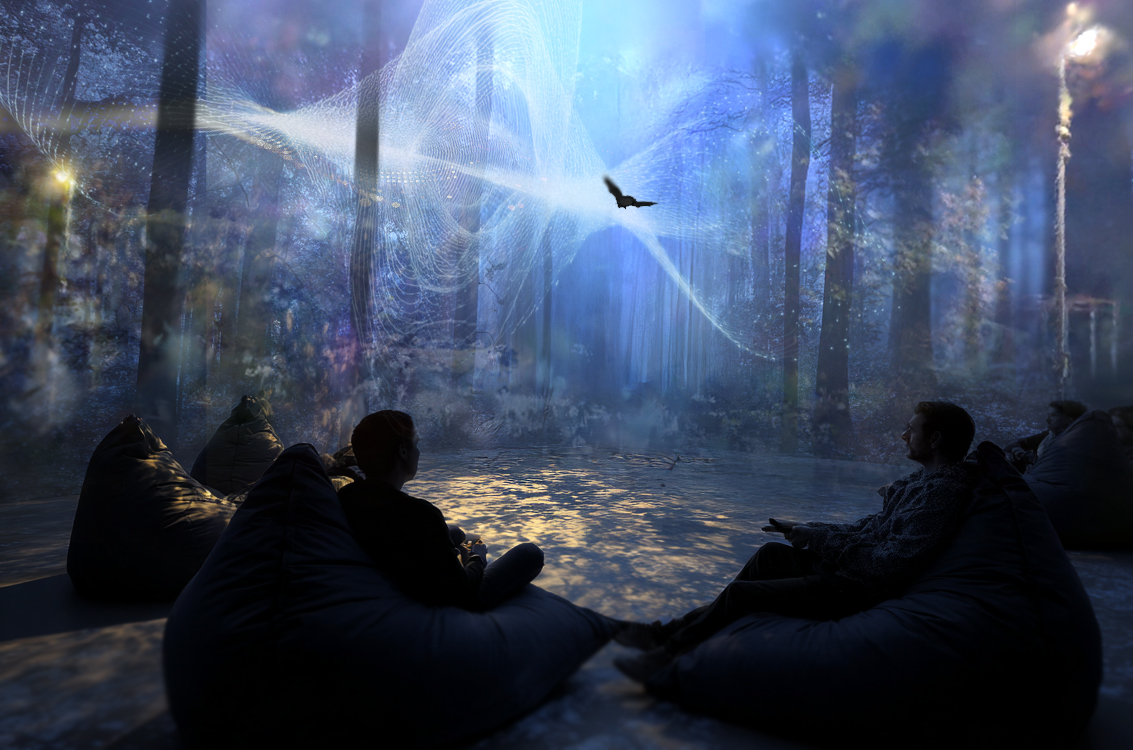
Top image: Echo Worlds, Anglia Ruskin University
Image by Domininkas Zalys
Running from 16 March to 2 April, this multidisciplinary festival hosted by the University of Cambridge comprises more than 350 events – the majority of which are free – spanning talks, debates, performances, exhibitions, hands-on activities, and immersive experiences that will bring together leading academics, writers, artists and public figures to explore how the world is changing, and what those changes demand of us.
High-profile speakers this year include broadcaster and campaigner Carol Vorderman, former Astronomer Royal Lord Martin Rees, Stanford climate scientist Mark Z Jacobson, obesity researcher Giles Yeo, historian and filmmaker Malik Al Nasir, former home secretary Charles Clarke, and award-winning geneticist, broadcaster and author Dr Adam Rutherford alongside hundreds of researchers from Cambridge and partner institutions.
Across the programme runs a clear sense of urgency. Events interrogate the nature of truth in the digital age, the power and limits of artificial intelligence, the politics of health and data, the legacies of empire and racism, and competing visions for responding to a warming planet.
The festival’s opening night sets the tone with a special screening of Ex Machina, hosted by the Evolution of Horror podcast, followed by a discussion with Professor Stephen Cave, co-director of the Leverhulme Centre for the Future of Intelligence. The film’s unsettling vision of artificial intelligence becomes a springboard for wider conversations about agency, control and responsibility.

Image by Domininkas Zalys
But while the festival tackles heavy themes, it also makes room for curiosity, play and shared discovery. Families and younger audiences are invited to explore hands-on science and creative activities designed to inspire as much as they inform.
Highlights include Ice Explorers, a lively introduction to polar science through icebergs and penguins, as well as interactive events that turn climate modelling, engineering and technology into something to build, test and experiment with. Meanwhile, Echo Worlds, an immersive sci-arts installation, uses sound, light and scent to transport visitors into the sensory world of bats and urban edge ecologies.
“This year’s festival was shaped by a sense that many of the assumptions we’ve lived with about truth, progress, democracy and even expertise are under real strain,” said David Cain, festival manager of the Cambridge Festival.
“Universities have a responsibility not just to generate knowledge, but to open it up to public scrutiny and debate, especially when the stakes are this high. The Cambridge Festival is a space to ask difficult questions, to listen across differences, and to imagine what comes next, not in the abstract, but grounded in research, lived experience and creative practice.”
The Cambridge Festival runs from 16 March to 2 April 2026. The full programme launches on 16 February, when tickets become available to book here.
